
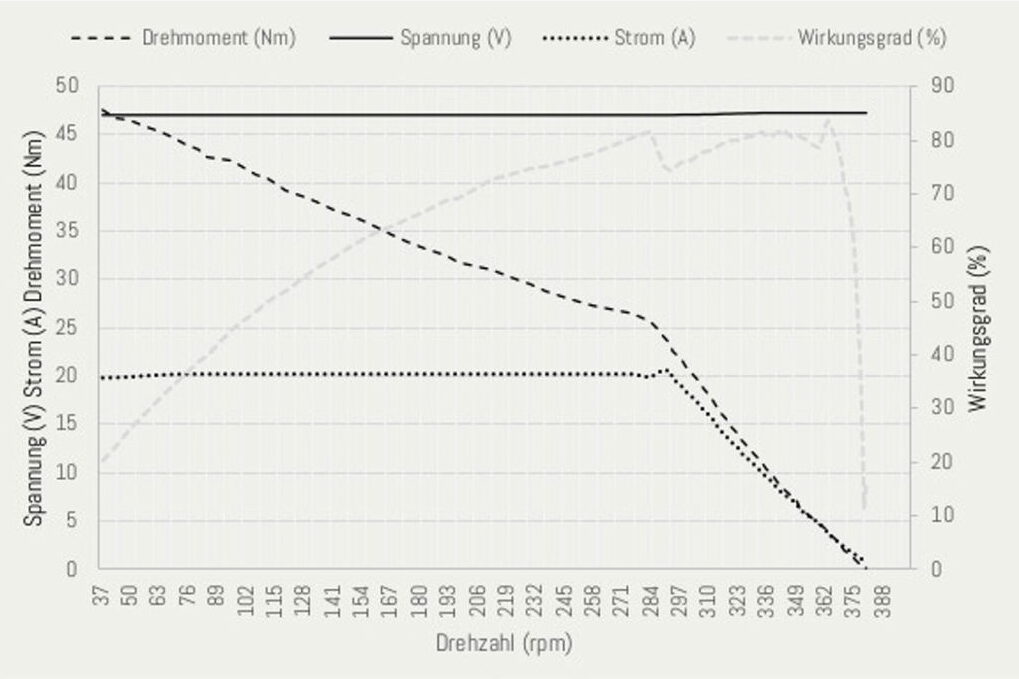
Aufgrund der Konstruktionsweise sind die Stromer Nabenmotoren relativ „drehfaul“ (max. 395 U/Min.) und im unteren Drehzahlbereich bzw. niedrigen Geschwindigkeiten (< ca. 20 km/h) nicht sehr effizient. Der Wirkungsgrad sinkt, die Abwärme steigt. Da diese vom Stator über einen Luftspalt zum Rotor transportierte werden muss ist auch die Kühlung, trotz der grossen Aluminiumtrommel, relativ bescheiden.
The speed/efficiency diagram of a 48 V / 500 Watt hub motor:
Temperature thresholds
Die Stromer Nabenmotoren von TDCM besitzen einen Überhitzungsschutz in Form eines NTC-Thermistors.
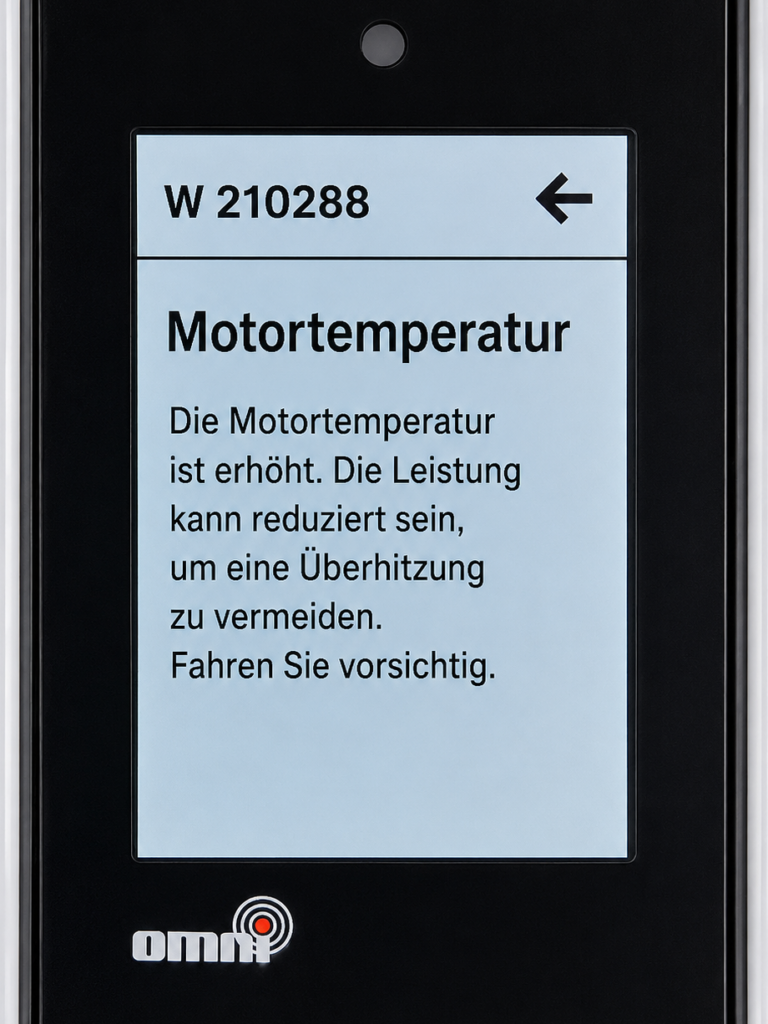
Gelbes Warndreieck: Wird der Motor heiss wird in einem ersten Schritt die Unterstützung reduziert und in einem zweiten Schritt eingestellt. Die Temperaturschwelle, bei der die Unterstützung nachlässt, liegt bei meinem Stromer ST3 (Bj. 2019) bei ca. 135 -140 °C. Es erscheint ein gelbes Warndreieck im Omni. Drückt man darauf erscheint ein Hinweistext:
Bei 150 °C wird die Unterstützung temporär eingestellt bis die Temperatur wieder gesunken ist. Die Abkühlphase ist relativ kurz und man kann nach wenigen Minuten wieder weiterfahren.
Rotes Warndreieck: Erscheint ein rotes Warndreieck gibt es vermutlich ein Problem mit dem NTC-Thermistor, dem Motorkabel oder der Verbindung zum Omni. Seihe dazu mehr Informationen here.
Offiziell lag die Abschaltschwelle einmal bei 100 °C (z. B. beim ST1x), wurde dann aber auf 150 °C angehoben.
Gemäss Rückmeldungen in Foren soll beim ST7 die Schwelle wieder auf 100 °C gesenkt worden sein und insbesondere im S-Modus (Sport-Modus) relativ recht schnell erreicht werden. Der S-Modus wird dann abgeschaltet bis die Temperatur wieder unterhalb diese Schwelle gesunken ist.
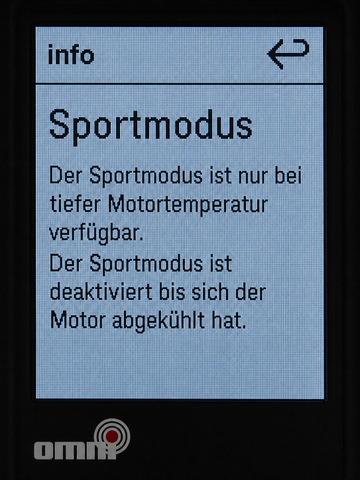
Update: FW SUI 4.5.0.3 from March 8, 2025
Stromer writes: The permitted engine temperature in Sport mode has been increased slightly so that it can be used for longer.
Battery temperature monitoring in standby: The temperature of the battery and motor is now read out regularly in standby so that the values in the Stromer OMNI app are always up to date.
Einen interessanten Thread zum Thema Temperatur gibt es u. a. im NL-Forum speedpedelecreviewforum.com here resp. here.
Is there a remedy?
Yes, but:
- You can reduce the gear selection and/or the torque sensor value%in the Omni.
- You can ride at a higher speed and higher cadence, especially on climbs.
- Recuperation is dispensed with (also generates waste heat) or only the smaller stages are used. See also the practical test here.
- Weight: The starting points here are the rider or the luggage. Every kg counts.
- Do not leave the bike in direct sunlight. This not only heats up the motor but also damages the battery.
The first three points mentioned naturally have disadvantages. On the one hand, more personal effort is required, and on the other hand, the braking system and its wear are increased.
See also: PROBLEMS - MOTOR - 'Hall or temperature sensor defective?
See also: PROBLEMS - MOTOR - 'Repairs'
See also: BREMSEN - 'Recuperation and recuperation'
See auch: MOTOR – ,Simulation of Engine Data‘