
With the introduction of new models (P178, P211, P218), the TMM sensor has been continuously improved. In addition to mechanical changes (slot width, mounting points), the sensor has also become even better protected against dirt and water (IP 66). On the Website I|D Bike writes the following about the newer model (for Stromer, the P211 and P218):
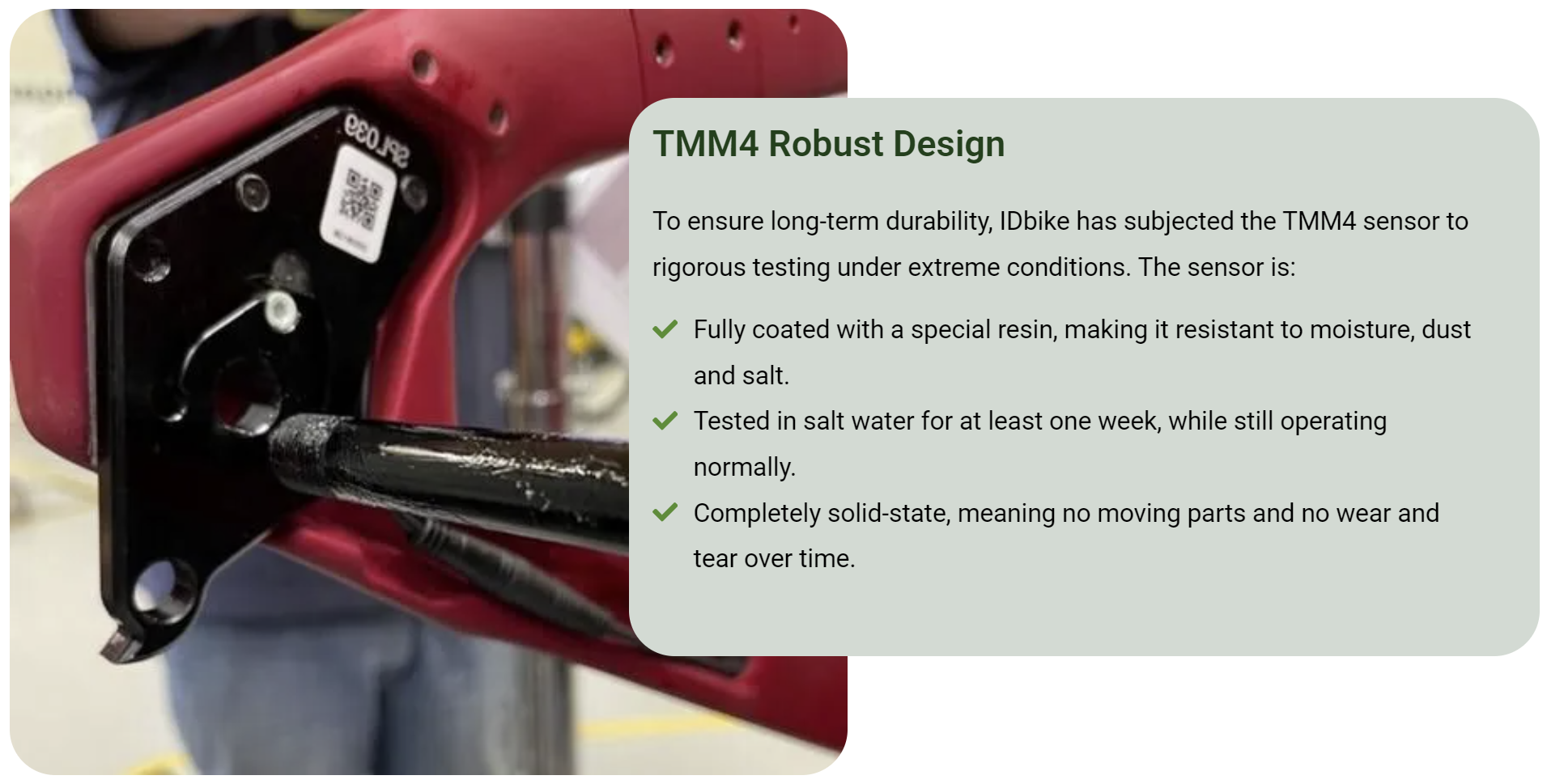
- The TMM4 sensor has a robust design.
- To ensure a long service life, IDbike has subjected the TMM4 sensor to rigorous testing under extreme conditions.
- The sensor is:
- Fully coated with a special resin, making it resistant to moisture, dust and salt.
- Tested in salt water for at least a week and continued to function normally.
- Completely semiconductor-based, i.e. no moving parts and no wear and tear over time.
When I|D bike, the manufacturer, was asked about the P178 sensor, the answer was as follows:
Originally, our TMM4 sensors never had any visible protection. Our conformal coating is so robust and durable that it can easily withstand various types of continuous salt spray tests (24/7 underwater) for more than 3 weeks. Furthermore, in the more than 12 years of TMM4 history, we have seen sensors packed with grease, oil, dirt, sand and other stuff, and generally this has never affected the function of the sensor. Still, OEM customers and dealers kept asking the same question: "Do we need protection?" It seemed like we weren't able to get our message across. When we finally started implementing the QR code years ago, we decided to combine the two things: 1. the sticker on the back is the carrier of the QR code and 2. it can stop the demand for some kind of visible protection.
Jan Goes / I|D bike - 2020
From a technical standpoint, the adhesive is therefore not necessary. Nevertheless, heavy soiling a possible cause of error and can interfere with the sensor's operation.
Alternative to glue
Alternatively, after thoroughly cleaning the disc, the adhesive can be replaced with simple black electrician's tape. Care must be taken not to tape within 3-4 mm around the thru-axle thread (free-running contact surface).
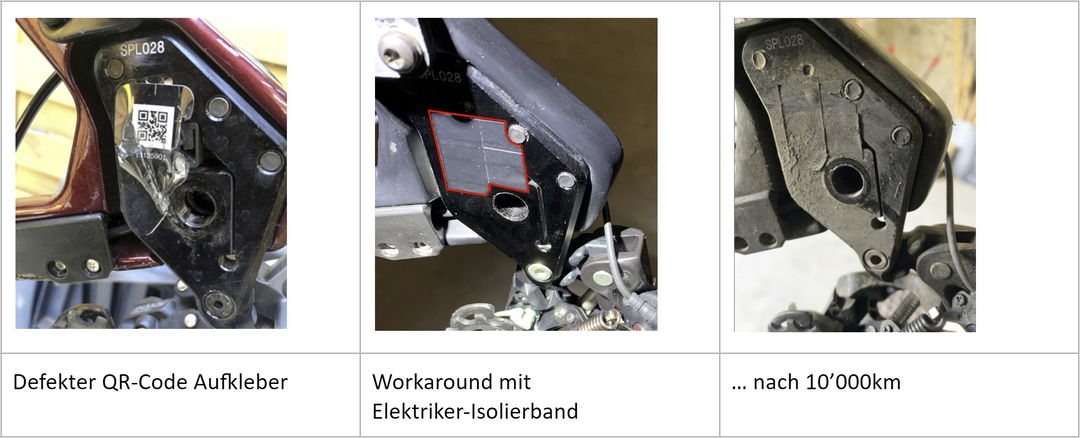
With my ST3, I used this alternative for the installed P178 sensor, and it worked regarding protection against dirt. However, it did not improve the sensor's somewhat temperamental behavior.
At the latest with the new models P211 and P218, this DIY method is obsolete. The sensors and cables are completely potted, the slot width has been massively increased, and they no longer contain any mechanical adjustment elements.
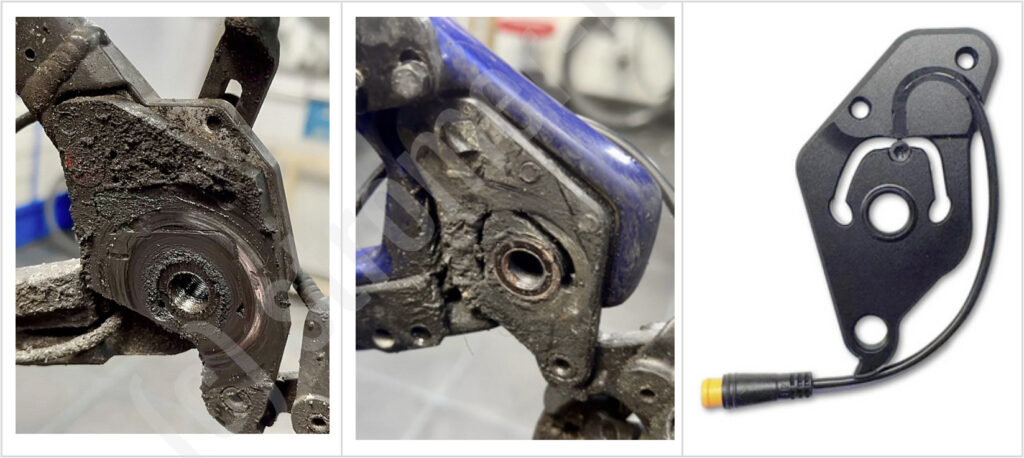
I want to add an essential piece of information to this article. Unfortunately, I had to learn it on my own Stromer.
Chain abrasion creates an iron powder-oil mixture. In my case, iron powder-wax. With belt drives, iron powder can be collected from the road.
Especially in the rain, it all liquefies a bit and sticks to the permanent magnet in the sensor.
This can lead to jerky sensor readings of 0.00V to 2.5V while driving, with good sensor readings when stationary. Should be done with a burst of compressed air or some brake cleaner.
Taping should be more permanent; it's best to only tape the inside facing the circuit, the other side is more protected.
Thank you for the input. The sensor itself (Hall effect element and electronics) are well protected against dirt and (salt) water. However, this does not solve the problem of (iron-containing) dirt accumulation around the magnet. If you experience uneven or „temperamental“ assistance, it is recommended to check and clean the sensor for dirt as one of the checkpoints. See also here and here.