
Chain breaks are rare on S-pedelecs, as are belt breaks. However, both can occur. In the case of belts, there is also the damage pattern of missing teeth.
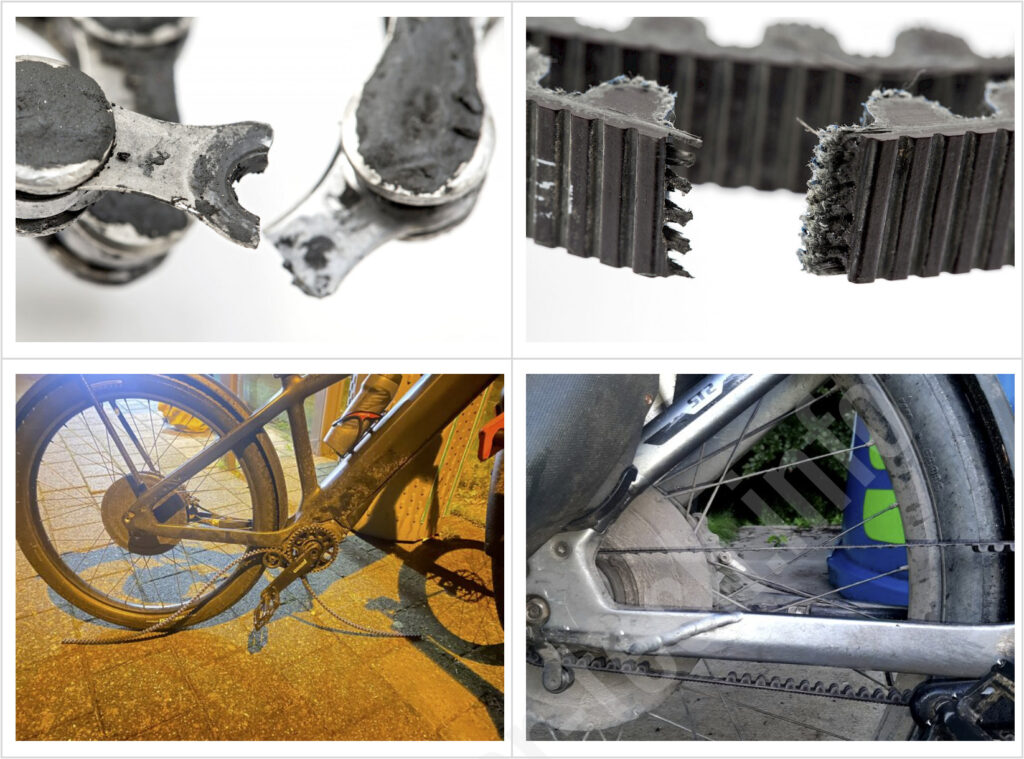
The reasons for a belt failure can be multifaceted. They range from a lack of maintenance, structural damage due to improper loading or handling (storage), to insufficient or excessive belt tension, twisting, kinking, external force, misalignment, and more...
The belt shown in the upper right tore after approximately 5,000 km and just under two years of operation. The reasons could not be determined. The belt in the lower right had a mileage of approximately 20,000 km.
If a belt has tooth breakage, it is usually caused by the belt skipping. This is brought about by insufficient belt tension or by foreign objects (e.g., branches) getting lodged between the belt and the pulley. Small stones in the „center track groove“ can also cause this type of damage.
Generally: Carbon parts are smart, extremely resilient, and durable, as long as the structure isn't damaged. With carbon belts, very few damages occur, which shows that the technology has significant redundancy. However, it's also true that if a belt breaks on the go, repair is impossible, unlike with a chain.
See circuit wear ‚Cost Comparison / Lifespan / Care & Maintenance‘
See also FAQ - 'Maintenance - chain and belt - what does Stromer say?
„Chains are still better for bicycles than belts“
Tristan Ridley describes his practical experience with chain and belt drives in a YouTube video with the provocative title „Chains are STILL better than Belts for Bicycles“. He describes why he switched back from belt drive to chain drive and how, through clever marketing by belt manufacturers, the widespread myth of the supposedly superior performance of belt drives is at least questionable.