
The energy consumption of an S-Pedelec per km is the sum of all influencing factors during a ride. The amount of energy drawn from the battery is measured and divided by the kilometers ridden.
Evaluation from forums
In forums and Facebook groups, screenshots of electric cars showing the Omni trip statistics are repeatedly posted. I have used the total kilometers driven and average energy values for the evaluation. This results in a picture that provides a statistical average beyond seasons and individual driving profiles. The statistics are based on 60 screenshots and show the following:
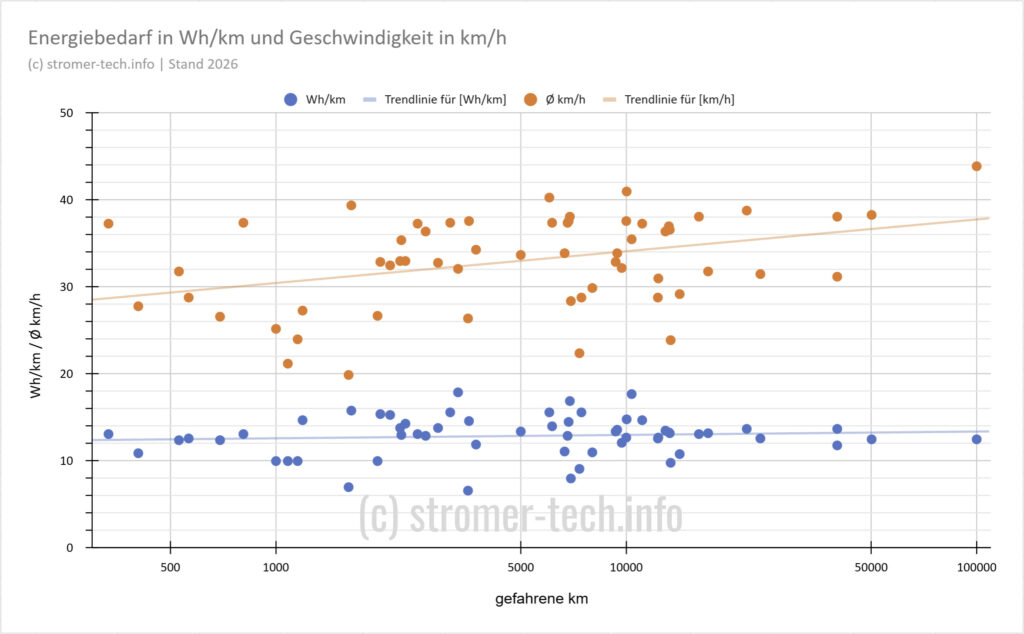
While energy consumption develops linearly with the total kilometers driven, it seems that electric car drivers drive faster the more they drive.
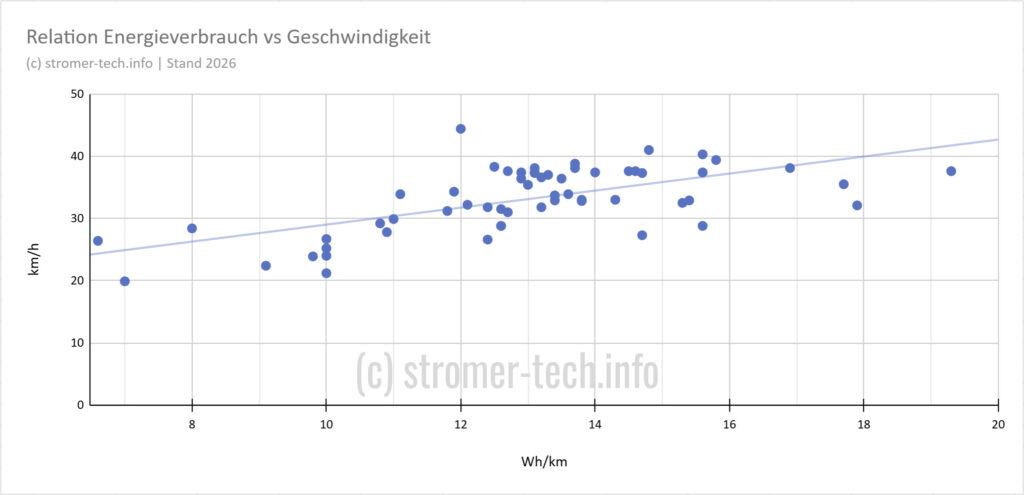
The question remains: „Is there a connection between energy consumption and speed?“ The answer is yes, and this is clearly evident from the diagram.
A somewhat older table on consumption and ranges for Stromer S-Pedelecs was published in the Electricbikereview forum. Here to go to the corresponding post.
Own experience
For my ST2 and ST3, I’ve been keeping track of the numbers from the Omni’s ride statistics for over 4 years. While these aren’t 100 percent accurate, they do provide a rough estimate. About 85 % of the statistics come from commuting; the rest were leisurely rides.
To summarize: The energy consumption depends significantly on the riding style, pedaling cadence, route profiles, the torque sensor settings in the Omni, and ultimately on the Stromer ridden. If you ride „all-in“ and always at the maximum speed limit, consumption can increase to around 18 Wh/km. If you take it easy and reduce the average speed to below 30 km/h, single-digit Wh/km are also possible.
See Here too the topic: REACH – ,General‘